
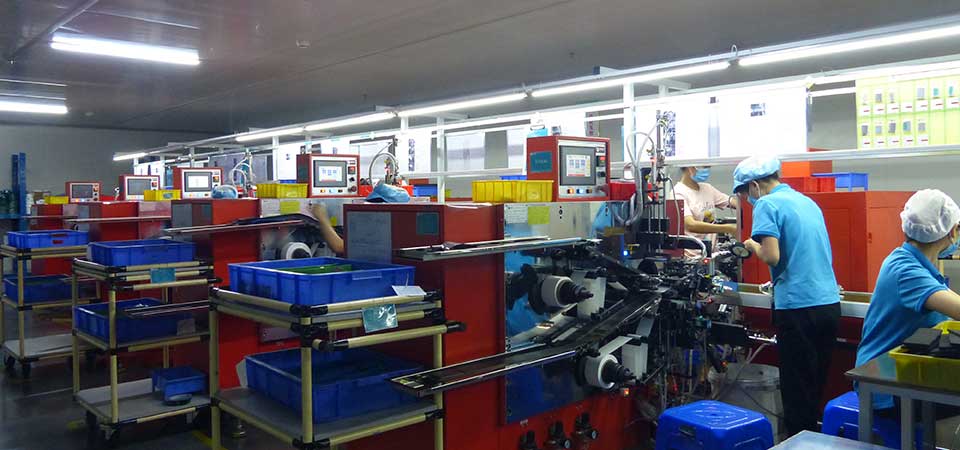
In today’s world of thinner, lighter, and more powerful electronics, the battery—the “heart” that powers everything—has never been more important. Among various battery technologies, small lithium polymer (Small LiPo) batteries are the dominant choice for devices such as TWS earbuds, wearables, portable medical tools, and IoT terminals.

Table of content
- The True Nature of LiPo Batteries: More Than “Soft Packs”
- Technical Guide for Engineers: Beyond the Datasheet
- Procurement & Quality Control
- Product Management: UX, Specs & TCO
- Technology Frontiers & Outlook
- Q&A — Practical Answers
1. The True Nature of LiPo Batteries: More Than “Soft Packs”
Calling LiPo cells simply “soft-pack” is incomplete. The real distinction is the electrolyte type.
Traditional lithium-ion: liquid organic electrolyte inside a metal can (steel or aluminum).
LiPo: gel-like or solid polymer electrolyte. Think of a jelly between electrodes—this reduces leakage risk and brings three key advantages:
- Flexible form factor: Without liquid electrolytes and rigid shells, cells can be ultra-thin (down to ~0.4mm), curved for watch backs, or L-shaped for phone interiors—giving designers great freedom.
- Higher energy density: Lightweight aluminum-plastic laminate and compact stacking yield better gravimetric and volumetric energy. Consumer models typically reach 180–250 Wh/kg; advanced silicon-carbon anode variants exceed 280 Wh/kg.
- Inherent safety: Gel electrolytes limit fluidity and reaction intensity during faults. Aluminum-laminate casings tend to vent at seals rather than violently rupture like metal cans.
Market note: By 2023, LiPo share in sub-1000mAh consumer batteries was over 75%, and forecasts point above 85% by 2027.
2. Technical Guide for Engineers: Beyond the Datasheet
Evaluate batteries across multiple dimensions rather than relying on single numbers.
| Parameter | Consumer Grade | Industrial Grade | Test Condition |
|---|---|---|---|
| Energy Density | 180–220 Wh/kg | 220–280 Wh/kg | 0.2C discharge, 25°C |
| Cycle Life | 300–500 cycles | 800–1000 cycles | 1C charge/discharge, 80% retention |
| Internal Resistance | <80 mΩ (100mAh) | <30 mΩ (100mAh) | 1 kHz AC impedance |
| Operating Temp | -20°C ~ 60°C | -40°C ~ 85°C | ≥70% capacity at 0.5C |
Practical tips: For wearables, choose high-voltage LiPo (3.8–3.85V) to gain ~8–10% runtime. Use protection ICs (e.g., DW01 + 8205) to reduce overcharge/over-discharge/short-circuit failures with minimal cost.
Key Concepts Explained
Capacity (mAh) vs Energy (Wh)
Capacity is charge under standard discharge. But runtime depends on energy: Wh = V × Ah. Compare energy when evaluating different voltage platforms (e.g., a 3.7V 1000mAh cell gives 3.7Wh).
C-rate (Charge/Discharge Rate)
1C means discharging in one hour (1000mA for a 1000mAh cell). Continuous C determines sustained power; pulse C covers short bursts needed by motors or RF amps. Modern devices commonly require 1C–3C fast charging—this stresses polarization, heat, and longevity.
Internal Resistance (IR)
IR combines ohmic and polarization resistances. It causes voltage drop (ΔV = I×R) and heat (P_loss = I²R). IR rises with aging, cold storage, and cycling—e.g., 50mΩ can double after heavy use, causing sluggish behavior in devices.
Cycle Life Reality
Published cycle counts are test-condition dependent (25°C, specific C-rates, end-of-life defined as 80% capacity). Real usage shortens life: high-rate cycling, extreme temperatures, and deep discharge accelerate degradation. A BMS with temperature monitoring and adaptive charging is essential for longevity.
3. Procurement & Quality Control
Quality control is a process, not a price negotiation.
Supplier Qualification
Prefer cell makers with IATF 16949 for automotive-level quality. Ensure cells meet UL 1642, IEC 62133, and UN38.3 (for air transport).
Incoming Inspection (IQC)
- Appearance & dimensions: check thickness and seal edges for wrinkles.
- Open-circuit voltage (OCV): new cells should be 3.6–3.8V. Many near 4.2V could indicate reused/refurbished items.
- IR & capacity matching: use professional testers; high variance implies poor process control.
- Destructive Physical Analysis (DPA): open suspect cells to inspect coating uniformity, separator type, and tab welds.
As of early 2024, a certified 50mAh LiPo cell typically costs around $1.0–1.5 in bulk. Much lower quotes often hide material or process compromises.
4. Product Management: UX, Specs & TCO
Product managers should define specs from the user experience and model power needs in Wh rather than just mAh.
- Runtime: model average and peak consumption to derive required energy (Wh).
- Charging speed: fast charge is expected—coordinate IC cost, protocol support (PD/QC), and cell selection.
- Size & shape: involve battery vendors in early ID phases for optimal cell geometry and space usage.
- Total cost of ownership: higher upfront cell cost for longer cycle life often reduces warranty and replacement expenses.
5. Technology Frontiers & Outlook
Materials
Silicon-carbon anodes can increase energy density 20–40% but bring volume expansion challenges (~300%). High-voltage cathodes (e.g., LNMO) can push voltage to ~4.7V but require compatible electrolytes. Semi-solid and solid-state promise major safety and density gains; pilot lines exist, but cost and scale remain barriers.
Systems & Structure
Cell-to-pack (C2P) integrates cells directly into packs or enclosures to save space. Smart BMS with AI enables State of Health (SOH) monitoring and Remaining Useful Life (RUL) prediction for predictive maintenance.
Q&A — Practical Answers
Q1: Why does capacity drop at -10°C and charging voltage spike?
Low temperatures slow ion diffusion, increasing polarization. Charging then causes lithium plating on the anode—dangerous and irreversible. Fixes: thermal conditioning (PTC heaters) and BMS limiting charge current in cold conditions.
Q2: Why do high-power cells often have lower energy density?
Power-focused designs use thinner electrodes, more conductive additives, and lower compaction—trading energy for fast-ion transport and high current capability.
Q3: How does self-discharge affect inventory?
A quality small LiPo should self-discharge <3% per month. >5%/month risks cells falling below protection voltage or indicating internal defects. Maintain inventory by periodic top-ups (e.g., every 6 months) and FIFO usage.
Q4: How to verify true fast-charge support?
- Rated charge rate ≥ 1C.
- Cycle life specified under fast-charge conditions.
- Low AC internal resistance across SOC.
- Independent test reports (industry standards).
Q5: When will solid-state reach small-device commercialization?
Expect semi-solid adoption in premium devices during 2024–2026, with broader full solid-state progress toward 2027–2030. Remaining hurdles: ionic conductivity, interface resistance, and manufacturing costs.
Closing
Battery technology moves fast. For engineers, buyers, and product managers, continuous learning is essential. Small LiPo cells hide complex chemistry and precision engineering—understanding their trade-offs helps build safer, more competitive products.