
Over the past five years, the stationary energy storage industry has moved beyond the traditional discussion of lithium iron phosphate (LiFePO4) versus ternary lithium batteries. As renewable energy penetration increases across Europe, the Middle East, and industrial regions of Asia, grid operators are beginning to face a more complex challenge: how to store larger amounts of electricity at lower system cost while maintaining long operational life and thermal stability.
This has accelerated interest in alternative electrochemical systems, including sodium-ion batteries, zinc-based batteries, and more recently, high-energy-density dual-ion battery (DIB) architectures using concentrated potassium fluorosulfonylimide electrolytes.
Although dual-ion batteries are still at the research and pilot-commercialization stage, many battery engineers and stationary energy storage designers are closely watching the technology due to its potential advantages in:
- Grid-scale stationary energy storage systems (ESS)
- Renewable energy integration
- Industrial microgrid buffering
- Long-duration energy storage applications
- Peak shaving and load shifting
- Backup power systems operating at 48V, 96V, 400V, 800V, and 1500V DC architectures
Why the Industry Is Looking Beyond Conventional Lithium-Ion Batteries
Conventional lithium-ion chemistry remains dominant in residential and commercial ESS installations ranging from 5kWh wall-mounted systems to multi-MWh containerized storage projects. However, battery developers are increasingly concerned about three long-term issues:
| Industry Challenge | Impact on ESS Projects |
|---|---|
| Lithium resource price volatility | Unstable project cost forecasting for utility-scale deployments |
| High thermal management requirements | Increased HVAC and cooling infrastructure costs |
| Cycle degradation under deep cycling | Reduced profitability in peak-shaving and arbitrage applications |
| Safety concerns at large scale | More complex fire protection and certification requirements |
In large industrial energy storage systems operating continuously between 0.5C and 2C discharge rates, system efficiency and thermal behavior become as important as pure energy density. This is where dual-ion battery systems are receiving increased academic and industrial attention.
What Is a Dual-Ion Battery?
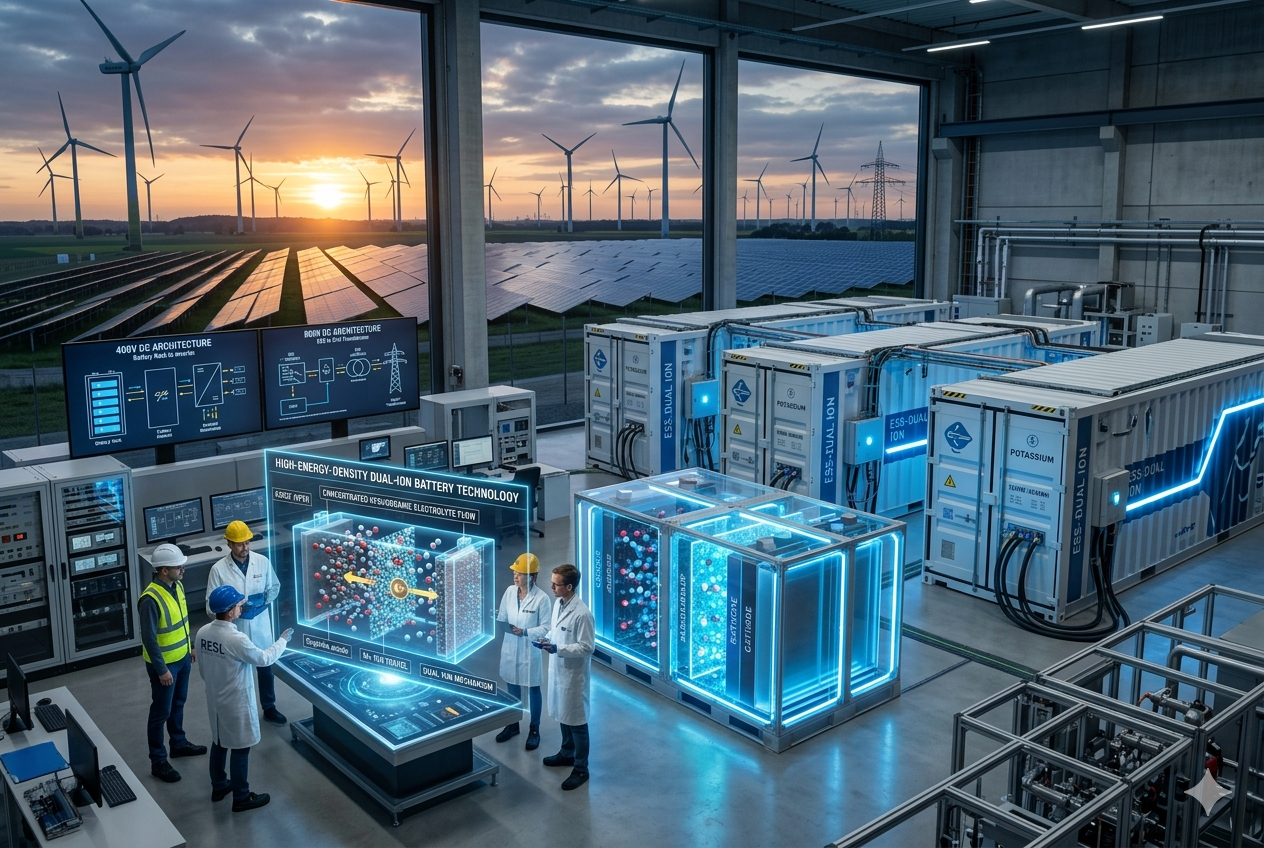
Unlike conventional lithium-ion batteries where only lithium ions move during charge and discharge cycles, a dual-ion battery stores energy through the simultaneous movement of both cations and anions.
In potassium electrolyte battery systems using concentrated fluorosulfonylimide (FSI-based) electrolytes:
- Potassium ions (K+) migrate toward the anode
- FSI-related anions participate in cathode-side charge compensation
- The electrolyte itself becomes an active component of energy storage
This electrochemical mechanism allows higher operating voltages and potentially improved energy density compared with several traditional aqueous systems.
The Importance of Concentrated Potassium Fluorosulfonylimide Electrolytes
Electrolyte stability remains one of the main technical barriers in next-generation stationary batteries. Research around concentrated potassium fluorosulfonylimide electrolytes is particularly important because it addresses several known limitations simultaneously.
| Electrolyte Property | Technical Advantage |
|---|---|
| High ionic conductivity | Supports faster charge/discharge rates |
| Improved electrochemical window | Enables higher voltage operation |
| Stable SEI formation | Reduces long-term degradation |
| Lower flammability risk | Enhances ESS operational safety |
| Better thermal stability | Suitable for industrial and outdoor ESS environments |
From an engineering perspective, thermal stability is especially important in regions where outdoor battery cabinets regularly experience ambient temperatures above 40°C. Many commercial ESS systems currently require aggressive cooling strategies to maintain cycle life. A more thermally tolerant electrolyte could reduce both auxiliary power consumption and maintenance costs.
Potential Performance Range for Stationary Energy Storage Applications
Although commercialization is still evolving, pilot-level dual-ion battery systems are already demonstrating performance ranges relevant to industrial ESS applications.
| Parameter | Emerging DIB Performance Range |
|---|---|
| System voltage | 48V / 96V / 400V / 800V DC |
| Energy density | 160Wh/kg – 260Wh/kg |
| Cycle life | 5,000 – 12,000 cycles |
| Round-trip efficiency | 88% – 95% |
| Operating temperature | -20°C to 60°C |
| Application scale | 10kWh – multi-MWh ESS |
These figures place potassium electrolyte battery technology in an interesting middle position between conventional lithium-ion systems and long-duration flow battery architectures.
Where Dual-Ion Batteries May Fit in Future Energy Infrastructure
In practice, dual-ion batteries are unlikely to immediately replace LiFePO4 systems in residential storage applications such as 5kWh, 10kWh, or 15kWh wall-mounted batteries. Instead, the technology appears more suitable for:
- Industrial energy storage systems operating daily charge/discharge cycles
- Grid balancing stations
- Renewable energy buffering for solar farms and wind farms
- Microgrid stabilization projects
- Large-scale distributed energy systems
- Containerized ESS projects above 500kWh
For example, an industrial microgrid combining:
- 500kW rooftop solar
- 1MW PCS inverter system
- 2MWh stationary battery storage
- EV charging infrastructure
could potentially benefit from a battery chemistry optimized for thermal resilience and long operational lifetime rather than purely maximum energy density.
The Real Challenge Is Manufacturing Scalability
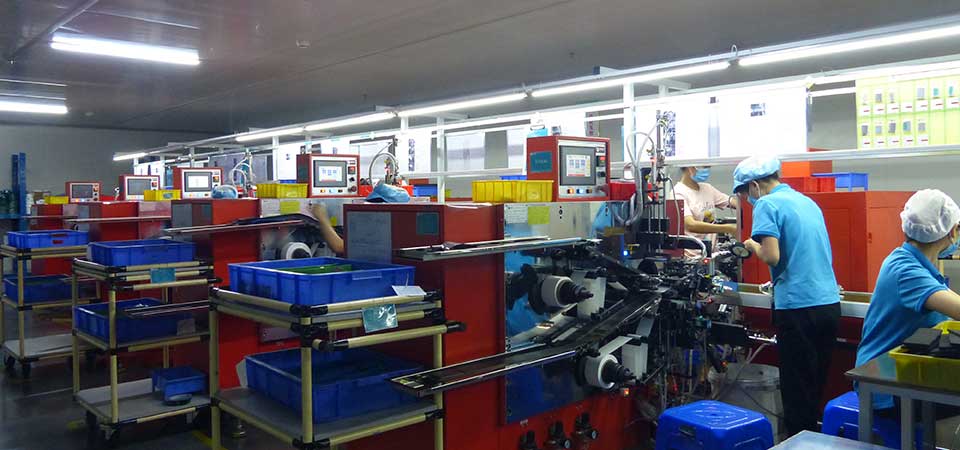
From discussions across battery supply chains, one issue consistently appears: laboratory success does not automatically translate into scalable manufacturing.
Many next-generation chemistries perform well in coin-cell testing but face major difficulties during:
- Electrode coating consistency
- Electrolyte cost control
- Large-format pouch cell assembly
- Prismatic module integration
- BMS compatibility
- Long-term field reliability testing
For stationary energy storage customers, reliability is often valued more than theoretical performance. A utility-scale battery expected to operate for 10–15 years must prioritize:
- Predictable degradation curves
- Safe thermal behavior
- Stable communication with EMS and PCS systems
- Low maintenance requirements
- Consistent supply-chain availability
How This Trend May Influence Future ESS Design
Battery technology development increasingly suggests that future energy storage infrastructure will not rely on a single chemistry. Instead, different battery systems may coexist based on application requirements:
| Application | Most Suitable Battery Trend |
|---|---|
| Residential ESS | LiFePO4 battery systems |
| Portable power stations | Lithium-ion / sodium-ion |
| Utility-scale long-duration ESS | Dual-ion / flow battery / sodium systems |
| High-temperature industrial ESS | Potassium electrolyte batteries |
| Fast-response grid support | Hybrid ESS architectures |
For EPC companies, solar developers, and industrial ESS integrators, understanding these technology trends early can help improve future project planning and investment decisions.
Conclusion
The development of concentrated potassium fluorosulfonylimide electrolytes for dual-ion batteries represents an important direction in next-generation stationary energy storage research.
While commercial deployment still requires further validation in large-scale systems, the technology addresses several critical industry concerns:
- Energy density improvement
- Thermal stability enhancement
- Long cycle life
- Reduced dependence on lithium supply chains
- Better compatibility with renewable-heavy grids
As Europe and other regions continue accelerating grid decarbonization, stationary energy storage technologies will likely diversify rapidly over the next decade. Dual-ion battery systems may become one of the important complementary technologies for future industrial and utility-scale energy storage infrastructure.
Frequently Asked Questions (FAQ)
1. What is a dual-ion battery?
A dual-ion battery is a battery system where both positive and negative ions participate in energy storage during charging and discharging processes.
2. Why are potassium electrolyte batteries attracting attention?
Potassium-based electrolytes may offer lower material costs, improved thermal stability, and strong compatibility with stationary energy storage applications.
3. Are dual-ion batteries commercially available today?
Most dual-ion battery systems are currently in the research or pilot-commercialization stage, although industrial interest is increasing rapidly.
4. What applications are suitable for this battery technology?
Industrial ESS, renewable energy buffering, utility-scale storage, and microgrid stabilization are among the most suitable applications.
5. Can dual-ion batteries replace LiFePO4 batteries?
Not immediately. LiFePO4 remains dominant in residential and commercial ESS, but dual-ion systems may complement future large-scale grid storage applications.
6. What voltage systems could dual-ion batteries support?
Future systems may support 48V, 96V, 400V, 800V, and even 1500V DC industrial energy storage architectures.
7. Why is electrolyte stability important in ESS?
Stable electrolytes help improve cycle life, thermal safety, charging efficiency, and long-term reliability in stationary storage environments.