
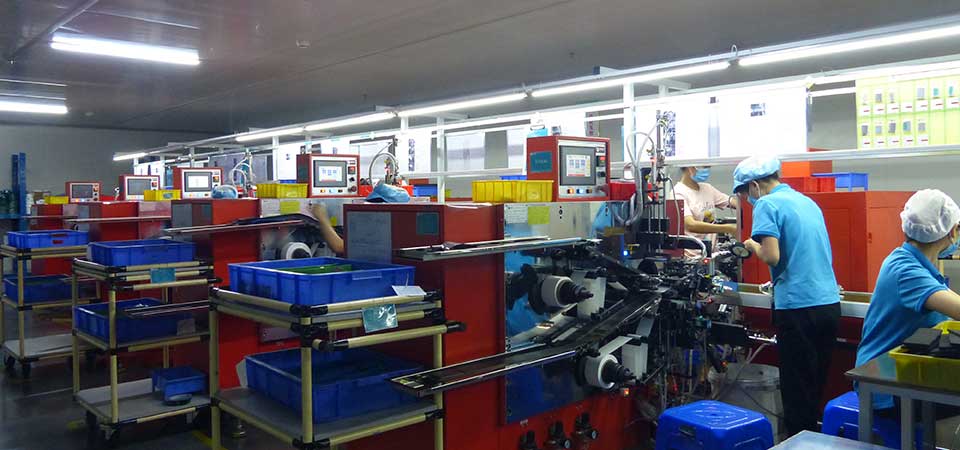
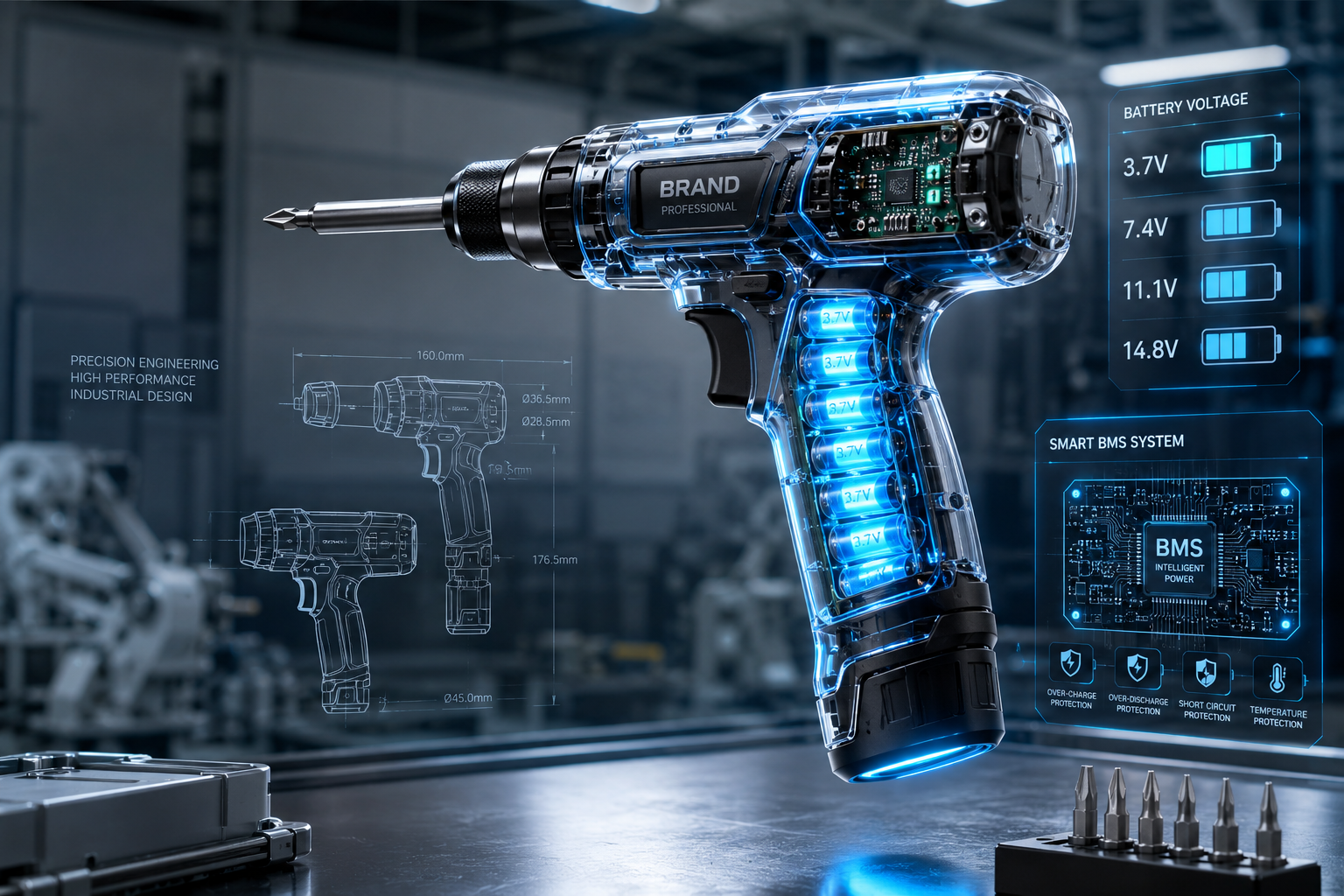
Walk into any electronics assembly workshop, appliance repair center, maintenance department, or DIY workstation today, and you will find cordless screwdrivers everywhere. As these tools become smaller, lighter, and more powerful, the battery is no longer just a power source—it directly affects torque output, operating time, charging speed, product weight, and overall user experience.
For product managers and design engineers developing the next generation of electric screwdrivers, choosing the right rechargeable battery pack is often one of the most important design decisions. A battery that is too large increases product weight and cost. A battery that is too small reduces runtime and user satisfaction. A battery without proper protection may create safety risks under frequent charging and high-current discharge conditions.
At MOTOMA, we work with OEM and ODM manufacturers developing cordless screwdrivers, electric drivers, precision screwdrivers, mini power tools, repair tools, smart assembly devices, and industrial fastening equipment. Based on practical engineering experience, this article explains how to select an appropriate lithium battery solution for different screwdriver applications.
Why Lithium Batteries Have Become the Standard for Cordless Screwdrivers
Traditional NiMH batteries have gradually been replaced by lithium-ion batteries and lithium polymer batteries due to higher energy density, lower self-discharge rates, faster charging capabilities, and reduced weight.
| Battery Type | Energy Density | Weight | Cycle Life | Fast Charging | Typical Application |
|---|---|---|---|---|---|
| NiMH | Medium | Heavy | 500 Cycles | Limited | Entry-Level Tools |
| Lithium-Ion | High | Light | 500-1000 Cycles | Supported | Consumer Power Tools |
| Lithium Polymer | High | Very Light | 500-1000 Cycles | Supported | Compact Screwdrivers |
For compact electric screwdrivers and precision repair tools, lithium polymer batteries are often preferred because they can be customized into different shapes and dimensions, helping engineers maximize internal space utilization.
Common Battery Voltages Used in Electric Screwdrivers
Different screwdriver designs require different voltage platforms. The choice depends on required torque, motor type, application environment, and expected runtime.
| Battery Voltage | Cell Configuration | Typical Capacity | Typical Application |
|---|---|---|---|
| 3.7V / 3.8V / 3.85V / 3.87V / 3.88V | 1S | 500mAh - 5000mAh | Precision Screwdrivers, Electronics Repair Tools |
| 7.4V | 2S | 1000mAh - 6000mAh | Household Electric Screwdrivers |
| 11.1V | 3S | 1500mAh - 8000mAh | Professional Repair Tools |
| 14.8V | 4S | 2000mAh - 10000mAh | Industrial Power Drivers |
For example, a mini precision screwdriver used for smartphone, laptop, and drone repair may only require a 3.7V 1000mAh or 1500mAh lithium polymer battery. In contrast, a professional cordless screwdriver used in furniture installation may require a 7.4V 2500mAh or 3000mAh battery pack to deliver higher torque and longer operating time.
Capacity Selection: Bigger Is Not Always Better
One common misconception among product developers is that larger battery capacity automatically creates a better product. In reality, battery capacity should match the actual usage scenario.
| Application Scenario | Recommended Capacity | Battery Voltage |
|---|---|---|
| Smart Precision Screwdriver | 500mAh - 1500mAh | 3.7V - 3.88V |
| Consumer DIY Screwdriver | 1500mAh - 3000mAh | 7.4V |
| Professional Service Tool | 2500mAh - 5000mAh | 7.4V / 11.1V |
| Industrial Driver | 5000mAh - 10000mAh | 11.1V / 14.8V |
Increasing capacity often means larger dimensions and higher weight. For handheld tools, balance and ergonomics are equally important. A lightweight screwdriver weighing 250g with a 1000mAh battery may provide a better user experience than a heavier model carrying an oversized battery pack.
Key Challenges Engineers Face During Battery Integration
1. Limited Internal Space
Modern electric screwdrivers continue to become slimmer and more compact. Standard cylindrical cells may not fit the available space efficiently. Custom lithium polymer battery packs allow flexible dimensions, including ultra-thin, curved, and customized shapes.
2. High Current Discharge Requirements
During startup and peak torque output, screwdriver motors can draw several times their normal operating current. The battery must support stable discharge without significant voltage drop.
High-rate lithium polymer cells can deliver discharge rates ranging from 5C to 20C depending on application requirements, ensuring smooth motor operation even under demanding loads.
3. Fast Charging Expectations
End users increasingly expect quick charging capabilities. A properly designed battery management system (BMS) combined with quality cells can support fast charging while maintaining battery lifespan and safety.
4. Product Safety Compliance
Portable power tools sold globally often require compliance with certifications and transportation regulations such as UN38.3, IEC62133, CE, RoHS, MSDS, and other market-specific requirements.
MOTOMA Custom Screwdriver Battery Solutions
MOTOMA provides customized lithium battery solutions for screwdriver manufacturers and product development teams worldwide.
Our engineering team supports:
- Custom lithium polymer battery packs
- Custom lithium-ion battery assemblies
- 3.7V, 3.8V, 3.85V, 3.87V, 3.88V single-cell solutions
- 7.4V, 11.1V, 14.8V multi-cell battery packs
- 500mAh to 10000mAh capacity customization
- Integrated PCM/BMS protection design
- High-discharge battery configurations
- Fast charging optimization
- Connector and harness customization
- OEM and ODM project support
Whether the project involves a precision repair screwdriver, smart electric driver, cordless assembly tool, maintenance equipment, or industrial fastening system, battery specifications can be tailored according to runtime requirements, mechanical constraints, motor load profiles, and certification targets.
Future Trends in Screwdriver Battery Technology
Several trends are shaping future screwdriver battery development:
- Higher energy density silicon-carbon anode technology
- Smaller and lighter battery pack designs
- USB-C direct charging integration
- Smart battery monitoring via Bluetooth connectivity
- Faster charging with lower thermal generation
- Improved cycle life exceeding 1000 charging cycles
- Enhanced safety through intelligent protection systems
As cordless tools continue moving toward compact intelligent devices, battery technology will remain a key factor influencing product competitiveness and user satisfaction.
Frequently Asked Questions (FAQ)
1. What battery is commonly used in an electric screwdriver?
Most modern electric screwdrivers use rechargeable lithium-ion or lithium polymer batteries ranging from 3.7V to 14.8V depending on torque and application requirements.
2. Is a 7.4V battery better than a 3.7V battery for a screwdriver?
Not necessarily. A 7.4V battery provides higher power output and torque, but a 3.7V battery may be sufficient for precision repair tools where compact size and light weight are priorities.
3. How much battery capacity does a cordless screwdriver need?
Typical capacities range from 500mAh for compact electronics repair screwdrivers to 5000mAh or more for industrial power drivers.
4. Can lithium polymer batteries be customized for screwdriver projects?
Yes. Lithium polymer batteries can be customized in voltage, capacity, dimensions, connectors, wire length, protection circuits, and packaging structures.
5. What certifications are important for screwdriver batteries?
Common certifications include UN38.3, IEC62133, CE, RoHS, MSDS, and transportation compliance documents required by target markets.
6. How many charging cycles can a screwdriver battery achieve?
Quality lithium batteries typically provide 500 to 1000 full charge-discharge cycles, depending on charging conditions, discharge rates, and operating temperatures.
7. What factors affect screwdriver battery runtime?
Runtime depends on battery capacity, motor efficiency, operating voltage, torque demand, discharge current, and usage frequency.