
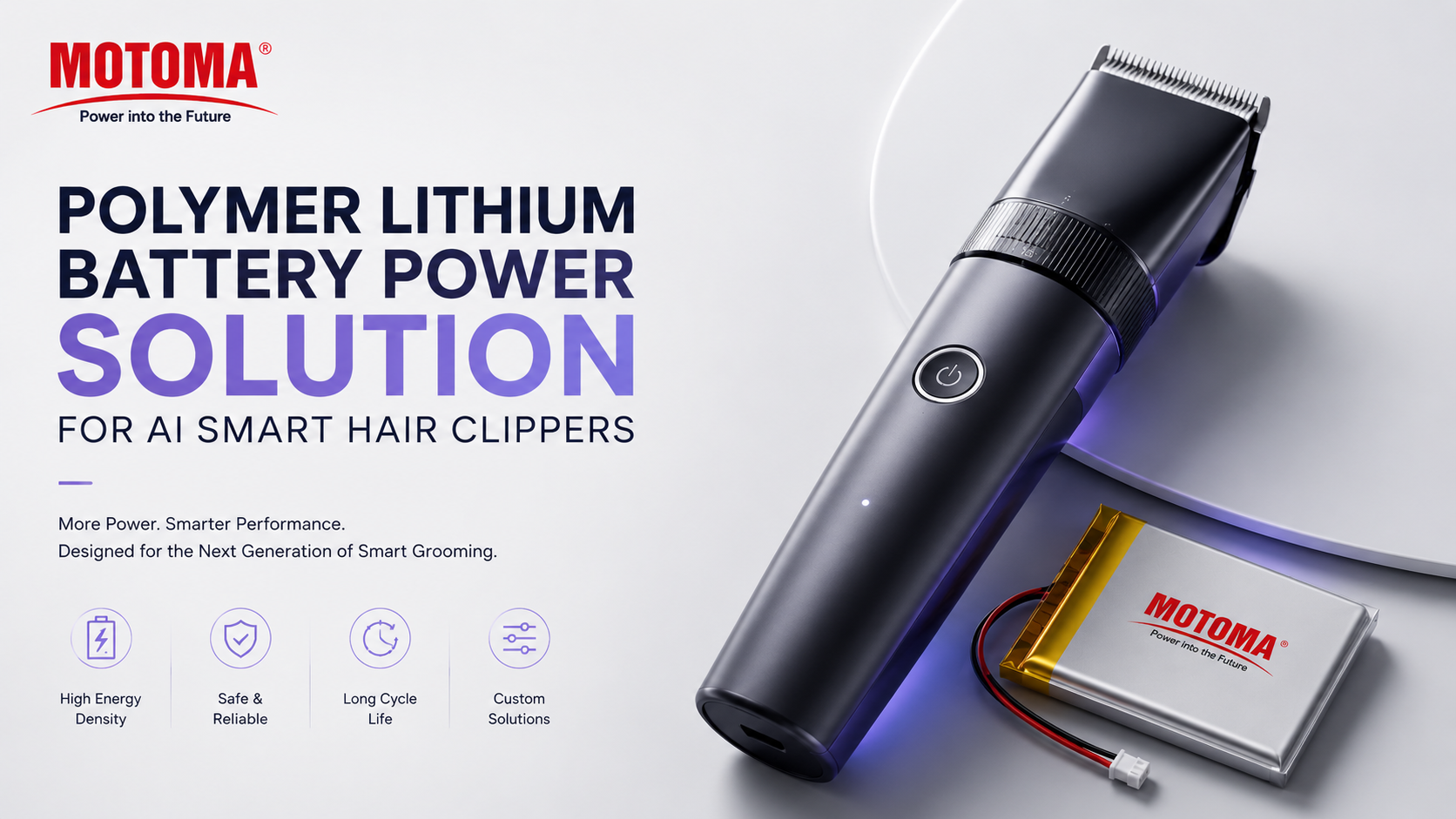
At CES 2026, the grooming industry experienced a clear technology shift. Devices such as the Glyde AI Hair Clipper introduced the concept of an “AI grooming coach”, integrating 3D spatial sensors, real-time vision algorithms for obstacle avoidance, and automatically adjustable cutting heads. As a result, power demand has moved away from traditional constant-speed motors toward a highly dynamic, high-frequency load profile. The battery is no longer just an energy source—it has become a core performance component.
1. Core Power Architecture: High-Power Polymer “Muscle” Cells
Modern AI hair clippers must drive both high-speed blades and micro servo motors for real-time blade length adjustment. This places extreme demands on peak current capability and voltage stability.
- High C-Rate Polymer Cells:
Using CES 2026–ready graphene-doped electrode technology, the battery supports up to 10C pulse discharge. During AI-controlled trimming—such as when encountering coarse hair or rapid hand movement— the servo motor load can spike instantly. Stable voltage delivery prevents processor resets and eliminates hair pulling caused by torque drop. - Low Self-Discharge and Wide-Temperature Chemistry:
Hair clippers are used frequently but may sit idle for long periods. The latest low self-discharge polymer formulation retains over 90% capacity after six months of storage. Electrolyte optimization also improves reliability in humid, high-temperature bathroom environments.
2. Energy Replenishment: Contactless Fast Charging and Smart Power Control
- GaN-Integrated Fast Charging:
A compact gallium nitride (GaN) charging module is integrated into the clipper, enabling 60W+ fast charging. This supports a practical use case of “1 minute of charging for 10 minutes of operation,” avoiding mid-cut power interruptions. - Adaptive Power Management (Smart Torque Control):
AI algorithms continuously monitor cutting resistance. Output power is reduced when trimming fine hair or running idle, and increased instantly in dense areas. This dynamic torque allocation extends effective runtime by over 40% compared to fixed-power systems using the same battery capacity.
3. Typical Battery Specifications for CES 2026 Smart Clippers
Based on products demonstrated at CES 2026, including Glyde and professional-grade AI trimmers, the following battery configurations represent common design targets:
| Product Category | Typical Capacity | Voltage / C-Rate | Charging Method | Key Value |
|---|---|---|---|---|
| Glyde AI Grooming Coach | 3000 mAh | 3.8V / 5C continuous | USB-C 100W PD / magnetic dock | AI vision + automatic blade control, ~180 min runtime |
| Professional AI Fade Clipper | 5000 mAh | 4.4V high-voltage system | Wireless fast-charge base | Up to 5 hours of continuous professional use |
| Home Quiet Smart Clipper | 2000 mAh | 3.7V / 2C | USB-C 30W | Low noise, lightweight design for children |
| Travel AI Trimmer | 1200 mAh | 3.85V custom-shaped cell | NFC 2.0 wireless charging | Ultra-compact, phone-to-device reverse charging support |
4. Summary: From Electrical Power to Mechanical Performance
- Enhanced Safety: Ceramic-coated separators improve puncture resistance. Even after accidental drops, the battery remains stable without leakage or thermal events.
- Ergonomic Integration: The polymer battery is formed into a C-shaped profile, following the natural curve of the handle to improve grip balance and comfort.
- Intelligent Interaction: Battery health data is synchronized with the companion app. When frequent fast charging reduces health below 75%, the AI recommends activating a “long-life protection mode.”