
Intelligent AI toys are redefining the technology limits of the toy industry. Speech recognition, local reasoning, visual perception, and continuous motion control make AI toys closer to long-running intelligent devices rather than intermittent consumer electronics. In this shift, the power system—especially the smart toy lithium battery—is no longer just an accessory but a critical factor for stability and reliability. Choosing the right smart toy lithium battery directly impacts product safety, performance, and mass production feasibility, making it a key consideration for product managers, industrial designers, and electronic engineers.
1. Top Power Challenges for AI Toys
1.1 Maintaining Voltage Stability under High Transient Loads
During AI computation, voice activation, or simultaneous wireless communication, the SoC and RF modules draw significant pulse currents. High internal resistance or poorly designed power paths can cause voltage drops, resulting in system instability.
Solution: Use high C-rate polymer cells with ultra-low ESR capacitors. By separating logic and motor drive circuits through hierarchical power distribution, the AI “brain” remains stable even when servos operate at peak loads. This approach ensures continuous, reliable performance of your smart toy lithium battery system.
1.2 Energy Density and Shape Adaptation in Limited Spaces
AI toys often have compact, irregular internal structures, leaving fragmented spaces for batteries. Standard cells may not fit without compromising runtime.
Solution: Employ custom smart toy lithium battery designs using stacked-process polymer lithium cells. Thickness, contour, and tab positions can be adapted to the toy’s structure. Combined with high-voltage system design, this maximizes energy output and extends usage time while preserving compact toy dimensions.
1.3 Safety and Compliance for Children’s Products
Children’s toys must comply with multiple international safety standards, which places higher demands on battery systems.
Solution: Integrate dual-layer protection—hardware and software—to cover overcharge, over-discharge, overcurrent, short circuit, and temperature anomalies. Each cell undergoes rigorous reliability and environmental testing to guarantee long-term safety, meeting international standards expected from any professional smart toy lithium battery manufacturer.
2. Collaborative Benefits of a Professional Power Solution
- For Product Managers (PM): Supports USB-C PD fast charging for enhanced user experience and premium positioning, highlighting benefits like “5-minute charge for 1-hour playtime.”
- For Industrial Designers (ID): Compact packaging and custom shape options free up design flexibility without compromising the toy’s aesthetics or ergonomics.
- For Electronics Engineers (EE): Low-ripple DC-DC design reduces interference to analog sensors, audio systems, and wireless modules.
- For Sourcing & Supply Chain Teams: Semi-custom solutions built on standardized modules reduce time-to-market (TTM) and optimize overall BOM costs.
3. Stability: The Hidden Value of Smart Toy Lithium Batteries
The core competitiveness of AI toys comes from long-term system stability. Algorithms determine functional limits, while the power system—especially a reliable smart toy lithium battery—determines whether a product is trustworthy. When computing power, structure, and safety operate cohesively within the same battery architecture, AI toys can deliver continuous, dependable companionship. True reliability starts with a dependable power system.
MOTOMA Lithium Batteries: Engineering Reliable Power for AI Toys
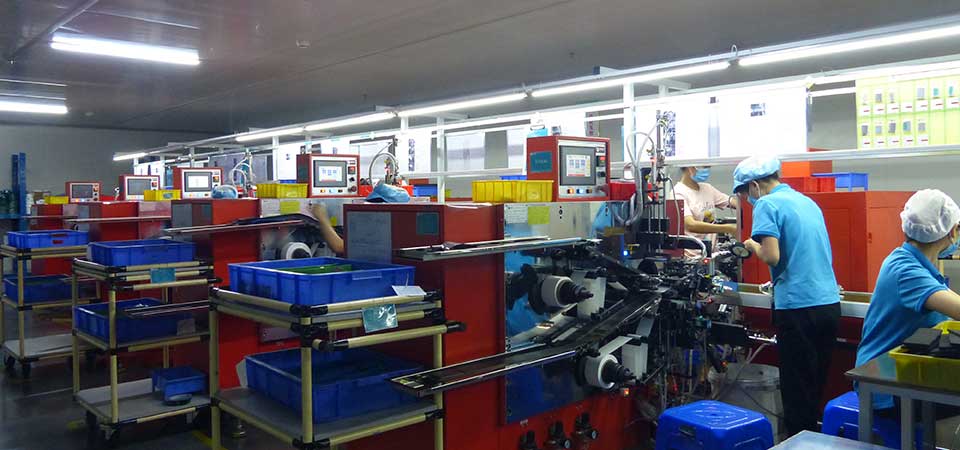
MOTOMA polymer lithium batteries excel in stability and mass production control, widely applied in AI toys and consumer-grade intelligent devices.
- High C-Rate Discharge Performance: Low internal resistance ensures stable operation under simultaneous AI computation, wireless transmission, and actuator peak load conditions.
- Stacked-Process and Custom Shape Capability: Supports ultra-thin, curved, and non-standard designs to maximize space utilization in complex toy structures, reflecting true custom smart toy lithium battery capability.
- High Energy Density and High-Voltage System: Provides extended runtime in limited volumes for long-lasting AI toy performance.
- System-Level Safety Design: Integrated cell protection and software monitoring meet UN38.3, MSDS, IEC62133, CB, KC, BIS, KSE, UL, REACH, and RoHS standards.
- Mature Production & Delivery: From prototype verification to mass production, MOTOMA ensures consistent parameters, lowers project risk, and shortens product launch cycles.
For AI toys, reliability is proven in real-world scenarios, not just specifications. MOTOMA provides engineering-grade power solutions, making smart toy lithium batteries a dependable foundation for continuous, stable intelligent toy operation.