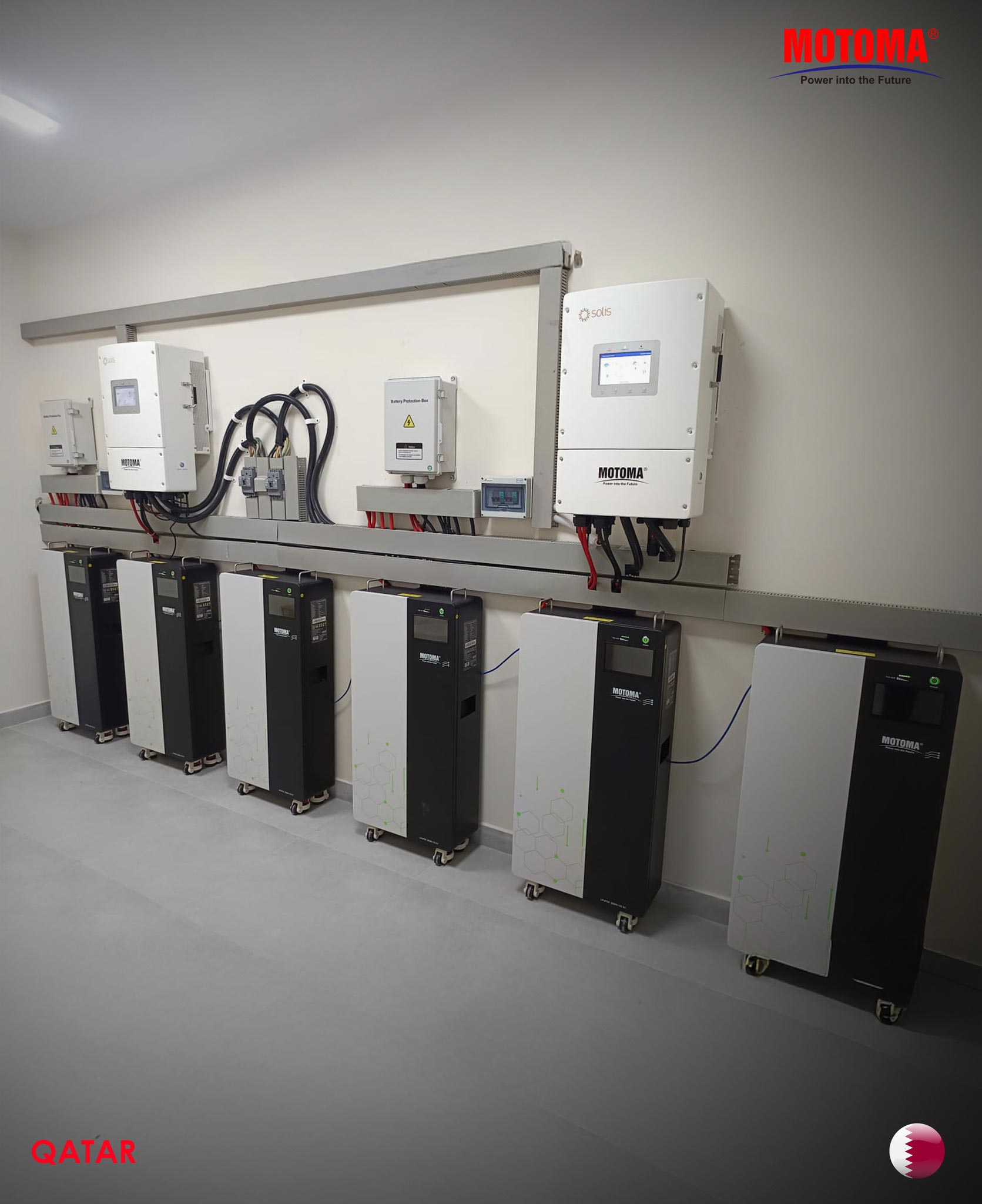
In the heart of the Gulf, where high solar irradiance meets increasing energy demands, a cutting-edge solar energy storage system was successfully deployed in Qatar. This project combines high-capacity lithium battery storage, advanced hybrid inverters, and next-generation PERC solar panels to provide clean, reliable, and cost-effective power in a region challenged by extreme temperatures and peak-time electricity costs.
1. System Configuration Overview
| Component | Quantity | Description |
|---|---|---|
| Lithium Battery Pack (M90 PRO) | 6 units | 16.384kWh per unit → 98.3kWh total storage |
| Hybrid Inverter (Solis S6-EH3P 15KW) | 2 units | 30kW total AC output |
| Mono PERC Solar Panels (555W) | 65 panels | 36,075W (36kW) total DC input |
This configuration is ideal for: Residential villas, small businesses, telecom base stations, and light industrial applications.
2. Energy Calculations & System Performance
2.1 Solar Panel Sizing
To feed two 15kW inverters: 1.2 × 30kW = 36kW recommended PV input
36,000W ÷ 555W = 65 PERC panels
2.2 Backup Capacity
Total battery capacity: 98.3kWh
Average household use: 30–50kWh/day
→ Up to 2 full days of backup
2.3 Peak Load Support
30kW supports: AC units, lighting, pumps, EV chargers, etc.
3. Main Components Breakdown
M90 PRO LiFePO₄ Battery
- Voltage: 51.2V / 320Ah / 16.384kWh
- 8000+ cycles @80% DOD
- Smart BMS, remote CAN/RS485 monitoring
- High current: 200A charge/discharge
- Lightweight and compact
Solis S6-EH3P Hybrid Inverter
- Max current: 290A
- Modes: Self-use, Feed-in, Off-grid
- Seamless backup: <10ms switch
- Smart load management, AC coupling
- IP66 outdoor-ready
555W Mono PERC Solar Panels
- High efficiency & low-light performance
- Heat-resistant, ideal for desert use
- Long lifespan: 25+ years
4. Installation Procedures & Safety Guide
4.1 Pre-installation
- Site assessment: roof strength, sunlight
- Design: south-facing or EW split
- Permit: KAHRAMAA approval (if needed)
4.2 Installation Steps
- Install mounting structure
- Connect solar panel strings
- Set up battery bank (shaded/vented)
- Mount and wire inverters
- Grounding and surge protection
- Fire safety: use Class C extinguisher
5. Advantages in the Qatari Market
- Grid independence and blackout protection
- Lower electricity bills with peak-shaving
- Green and silent energy alternative to diesel
- Expandable and app-monitored
6. Real-World Application Scenarios
| Sector | Use Case | Benefit |
|---|---|---|
| Homes & Villas | Cooling, lighting backup | No blackouts in summer heat |
| Retail & Offices | Lighting, POS systems | Save on peak usage costs |
| Industrial Sites | Motors, sensors, machines | Reliable 3-phase power |
| Remote Areas | Farms, towers, clinics | Off-grid 24/7 power |
7. Conclusion
This Qatar-based hybrid solar and energy storage system is an example of how modern energy technology meets regional needs. Designed to withstand the Gulf’s climate, support critical loads, and cut energy costs, it empowers homeowners and businesses with reliable, clean power—day and night.
Whether you‘re looking to future-proof your property, reduce operational costs, or ensure 24/7 energy security, this system provides a flexible and intelligent power solution that grows with your needs.