
À mesure que nos appareils deviennent plus petits, plus intelligents et plus puissants, la demande de sources d’énergie compactes et performantes continue d’augmenter. Une solution particulièrement intéressante est la batterie lithium-polymère, souvent appelée batterie LiPo. Légères et flexibles, ces batteries avancées sont largement utilisées dans de nombreux secteurs, de l’électronique grand public à l’aérospatiale.
Qu’est-ce qu’une batterie lithium-polymère ?
Une batterie lithium-polymère est un type de batterie lithium-ion rechargeable utilisant un électrolyte gélifié à base de polymère au lieu de l’électrolyte liquide des cellules lithium-ion classiques. Cette conception offre davantage de flexibilité et permet de fabriquer des batteries de formes variées et ultrafines, jusqu’à seulement 0,4 mm.
- High energy density (typically 500–620 Wh/L depending on chemistry)
- Flat, lightweight, customizable shapes
- Nominal voltage of 3.7 V per cell
- Operating temperature range from –40 °C to +85 °C
- Low risk of leakage or electrolyte spillage
Types de chimies des batteries lithium-polymère
| Type de batterie | Matériau de cathode | Tension | Points forts |
|---|---|---|---|
| LCO (Lithium Cobalt Oxide) | LiCoO₂ | 3.7 V | High energy density, compact, lower safety |
| NMC/NCA (Nickel-based Ternary) | Li(NiMnCo)O₂ or NCA | 3.6 V | Balanced performance, used in EVs |
| LMO (Lithium Manganese Oxide) | LiMn₂O₄ | 3.7–4.2 V | High safety, moderate energy, power tools |
| LFP (Lithium Iron Phosphate) | LiFePO₄ | 3.2 V | Superior thermal stability, long lifespan |
Avantages de sécurité des batteries lithium-polymère
- Solid/Gel Électrolyte – More stable, less leakage risk.
- Wide Temperature Range – Operates from –40 °C to +85°C.
- Overcharge & Short Circuit Protection – Built-in BMS or PCM improves safety.
Note: Sécurité still depends on using certified components, proper charging, and avoiding physical damage.
Applications concrètes des batteries lithium-polymère
- Consumer Electronics: Smartphones, tablets, smartwatches—LiPo enables slim, lightweight designs.
- Drones & RC Models: High discharge rates and low weight make them ideal for UAVs and RC devices.
- Electric Vehicles & E‑bikes: Compact form and high power support portable mobility.
- Power Tools: Enables cordless drills, saws with fast power delivery.
- Medical Devices: Portable monitors and defibrillators benefit from stable, safe power.
- Renewable Storage & UPS: Custom shapes and long standby life for solar storage and backup systems.
- Aerospace & Defense: UAVs, satellites, and rugged gear use LiPo for weight savings and thermal reliability.
LiPo vs Li-ion : quelle différence ?
| Caractéristique | batterie LiPo | Li‑ion Battery |
|---|---|---|
| Électrolyte | Gel‑like polymer | Liquid |
| Forme | Flexible pouch | Rigid cylindrical/prismatic |
| Poids | Lighter | Heavier |
| Densité énergétique | Slightly lower | Higher |
| Coût | Higher | Lower |
| Sécurité | Safer if punctured | More risk of thermal runaway |
Inconvénients des batteries LiPo
- Shorter cycle life (500 cycles)
- Higher cost
- Potential for swelling or fire if damaged or overcharged
- Reduced low-temperature performance (unless using specialized chemistries)
Perspectives d’avenir
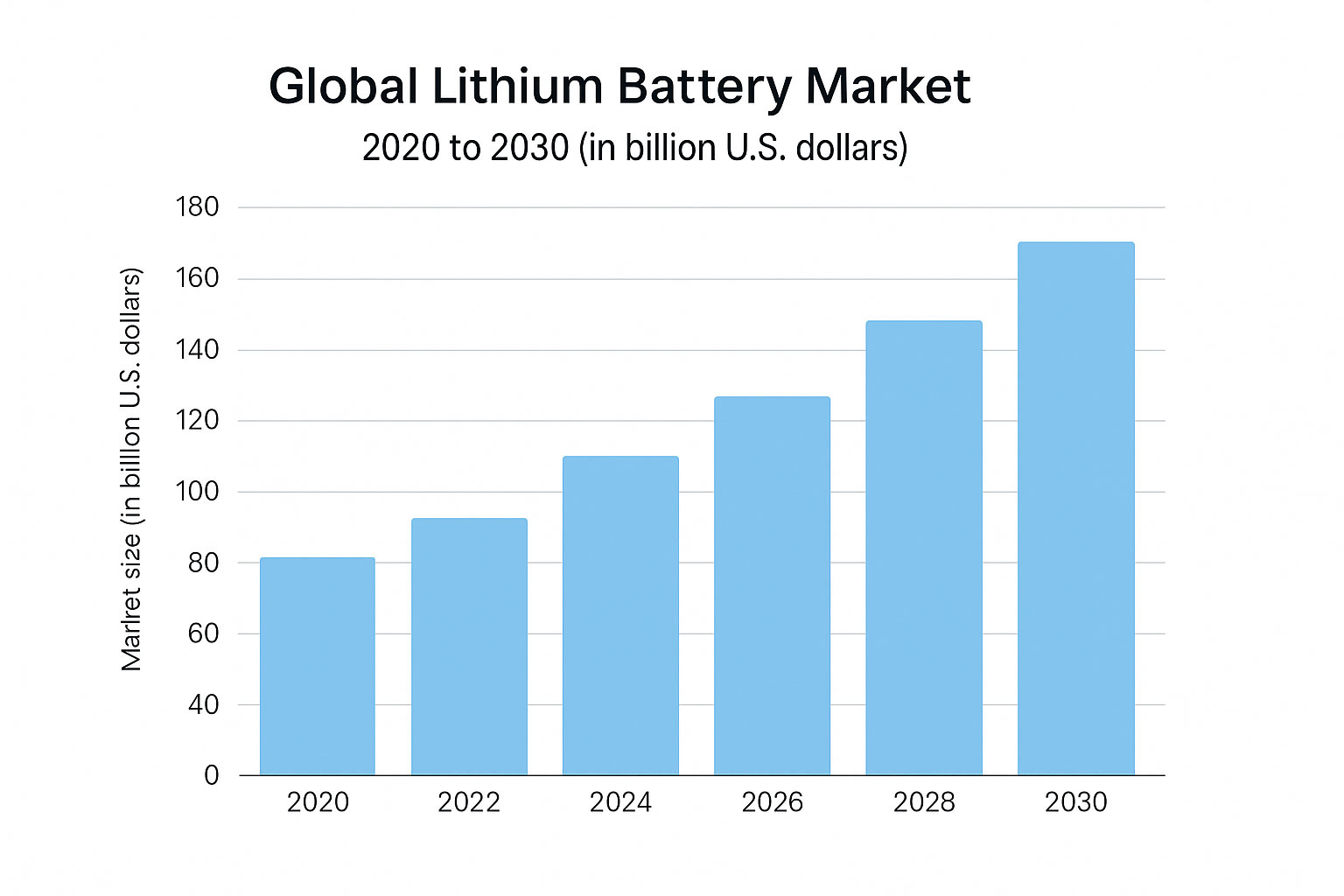
Demand for ⟨em⟩battery type lithium polymer⟩ continues to grow in areas like aerospace, wearable tech, and renewable energy. Innovations such as high‑nickel cathodes and solid‑state polymer electrolytes are making LiPo even more reliable. According to Statista, the global lithium battery market is expected to exceed $160 billion by 2030.
Choix d’ingénierie
In Consumer Electronic design project, selecting the right power source is critical—not only for performance, but also for safety, reliability, and form factor integration. In this regard, the battery type lithium polymer stands out as an ideal solution for modern mobile electronic products.
Its lightweight structure, flexible design, and stable electrochemical behavior make it perfectly suited for compact devices like smartwatches, portable medical tools, and wireless wearables. Moreover, with the right battery management system (BMS) and protection circuitry, LiPo batteries offer a safe and dependable power supply, even in demanding environments.
When designing for mobility and user safety, lithium polymer batteries are no longer just an option—they’re a strategic engineering choice.